Organic farming in India is no longer a niche hobby for health-conscious consumers alone. For farmers who plan carefully, combine government support with the right certification, and target export markets, organic production can become a serious income stream. The central scheme that anchors this pathway is Paramparagat Krishi Vikas Yojana (PKVY), supplemented by export facilitation through APEDA and, for northeastern farmers, the higher-paying MOVCDNER programme.
This guide explains what PKVY actually pays, how the cluster model works, how certification differs for domestic versus export sales, and how organic farming connects to protected cultivation subsidies when you want to grow high-value crops under better environmental control.
Why organic and export farming matters in 2026
Indian consumers and international buyers both pay premiums for certified organic produce. Export markets in Europe, the Middle East, and Southeast Asia demand traceable supply chains, which is why certification—not just farming without chemicals—is the gatekeeper to export income.
On the subsidy side, PKVY has already made a large footprint. Since 2015–16, PKVY has covered 14.99 lakh hectares by forming 52,289 clusters involving 25.30 lakh farmers (as of February 2025). ₹2,265.86 crore has been released under PKVY from 2015 through 25 January 2025. Those numbers tell you the scheme is operational at scale, not a pilot programme on paper.
If you are comparing modern farming options, organic export sits alongside protected cultivation (polyhouse, shade net) and other high-value routes. Many export-oriented farmers eventually combine organic practices with greenhouse or shade-net structures to control quality year-round. When you explore protected cultivation subsidies, read our polyhouse subsidy guide for 2026 for the critical rule about applying before construction.
PKVY subsidy breakdown — what you actually receive
Under PKVY, eligible farmers receive ₹31,500 per hectare over three years. Of this total, ₹15,000 is paid through Direct Benefit Transfer (DBT) specifically for on-farm and off-farm organic inputs such as bio-fertilisers, vermicompost, and approved organic pest management materials.
The remaining portion of the ₹31,500/ha package supports cluster-level activities: capacity building, documentation, internal control systems for organic compliance, and extension services. Because the money is spread across three years, treat PKVY as a transition support programme—it helps you survive the conversion period when yields may dip before organic premiums kick in.
Subsidy percentages, release schedules, and cluster approval criteria can change by state and funding window. Always verify current PKVY guidelines on your state agriculture department portal and the official Government of India organic farming pages before planning your crop calendar.
MOVCDNER for northeastern states
Farmers in the northeastern region have access to MOVCDNER, which provides ₹46,500 per hectare—a higher rate than standard PKVY. If you farm in Assam, Meghalaya, Nagaland, Tripura, or other NE states, check whether your block is forming or joining an MOVCDNER value-chain cluster before you commit land to conversion.
The PKVY cluster model explained
PKVY does not operate as a simple individual cash grant on a single isolated field. The scheme is built around clusters of roughly 20 hectares. Farmers within a cluster:
- Convert adjoining or nearby land to organic practices on a shared timeline
- Participate in group training and internal quality checks
- Document input use and field histories for certification readiness
- Access the three-year financial package as part of the approved cluster
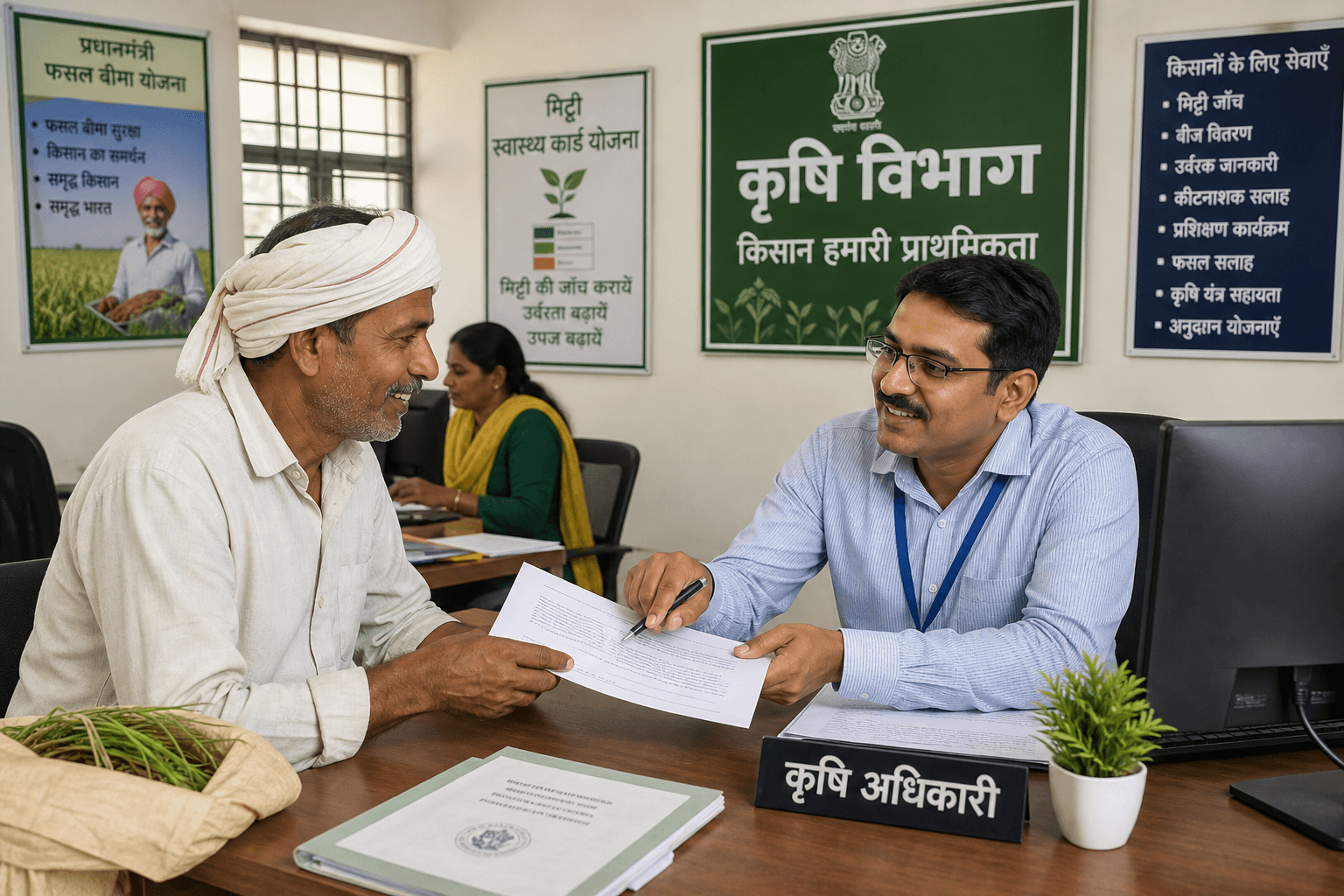
Practically, this means you should talk to your block agriculture officer or organic farming nodal officer early. If your village already has an active cluster, joining is faster. If not, you may need to mobilise neighbouring farmers to meet the area threshold.
Cluster coordination also helps with bulk input purchase (compost, bio-pesticides) and shared transport to collection centres—both reduce per-unit cost during the conversion years when margins are tight.
Certification pathways — PGS-India vs NPOP for export
Certification is where domestic organic farming and export farming diverge.
PGS-India (Participatory Guarantee System) suits farmers selling in local markets, direct-to-consumer channels, or domestic retail chains that accept PGS labels. It is group-based, lower cost, and well suited to PKVY cluster structures where peer verification is already happening.
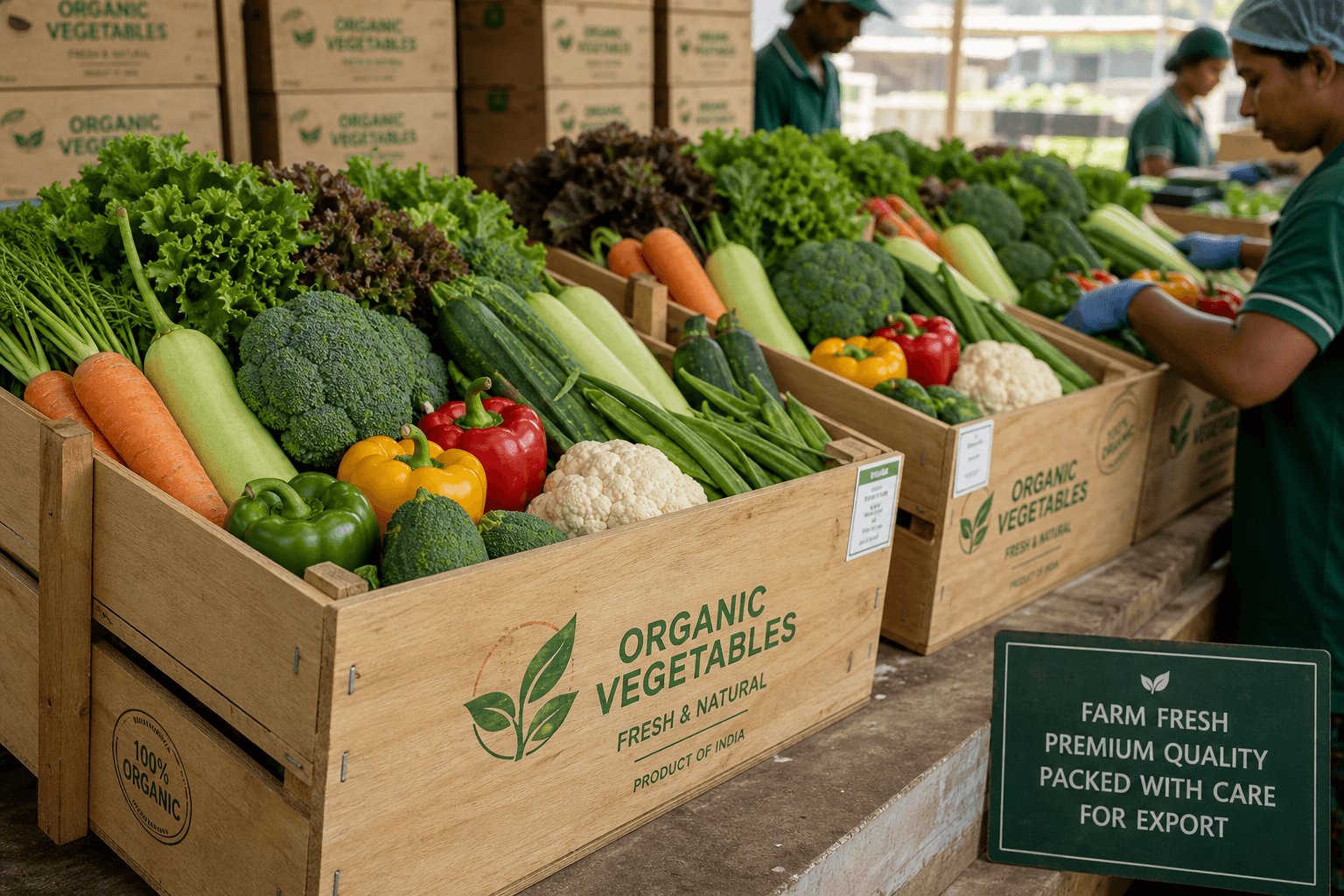
NPOP (National Programme for Organic Production) through third-party certification is what most export contracts require. An accredited certifying body audits your fields, input records, and handling practices. NPOP certification costs more and takes longer, but it unlocks APEDA-facilitated export documentation and buyer confidence abroad.
APEDA (Agricultural and Processed Food Products Export Development Authority) supports export certification, branding, and market development for Indian organic products. If your goal is export income—not just a higher mandi price—budget for NPOP certification timelines (often 2–3 conversion years) and start record-keeping from day one of cluster registration.
States leading organic exports
Sikkim and Kerala lead organic exports from India, benefiting from early policy focus, strong horticulture infrastructure, and established buyer linkages. That does not mean farmers in other states cannot export—it means you should study how those states structured certification support, FPO aggregation, and cold-chain handover to exporters.
Combining organic farming with protected cultivation
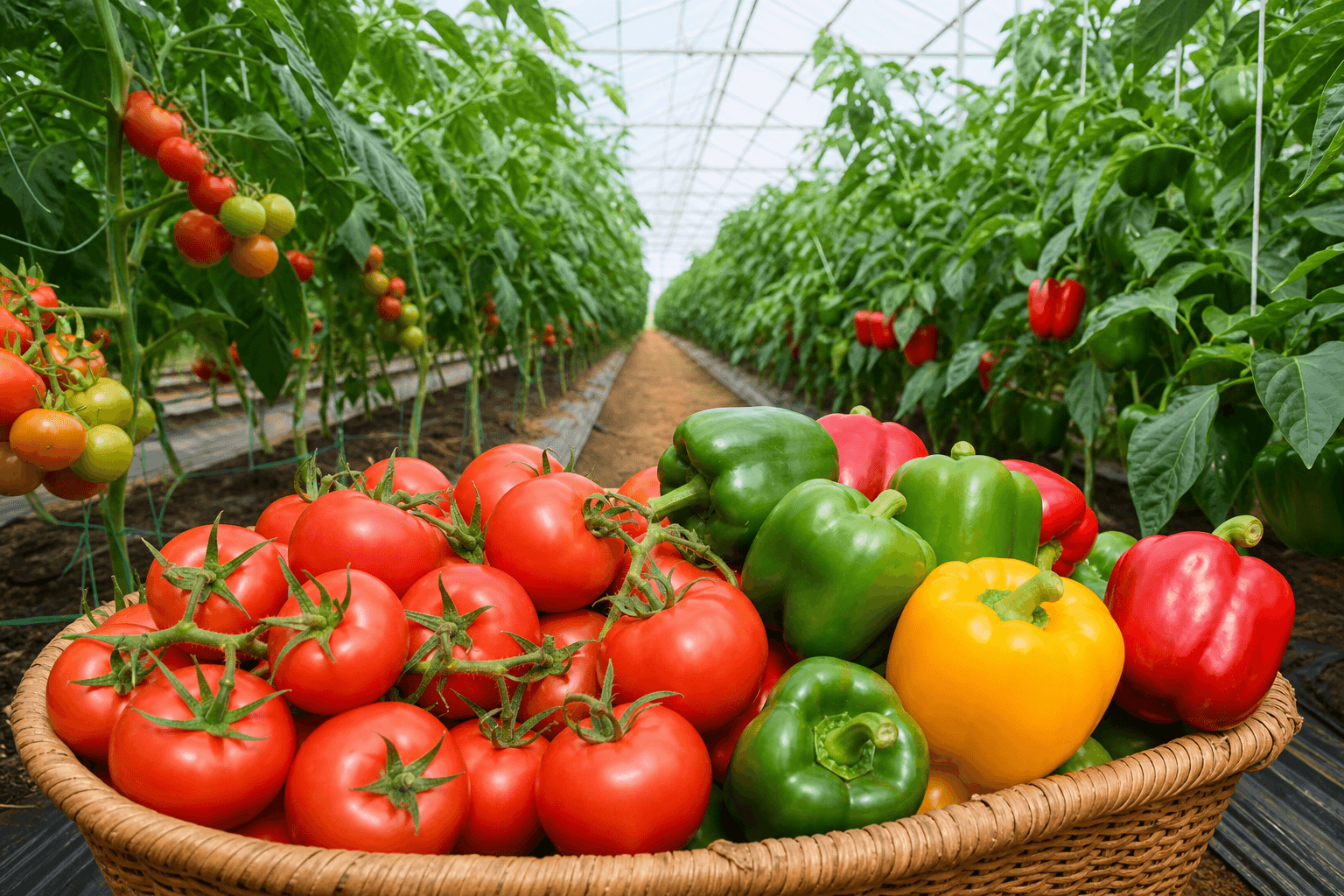
Organic rules and greenhouse farming are compatible, but planning matters. High-value protected crops—coloured capsicum, cherry tomato, herbs—can command both organic and greenhouse premiums if you manage inputs carefully and maintain NPOP-compliant records.
Protected cultivation structures (polyhouse, shade net house) qualify for separate subsidies under NHM/MIDH and NHB routes—typically 50% general subsidy, with higher rates for SC/ST and hilly/NE farmers. There is no dedicated hydroponics or organic-only greenhouse subsidy, but the NHB protected-cultivation route (up to 50%) can fund the greenhouse shell while you grow organic crops inside.
If you pursue this combination:
- Align your PKVY cluster conversion timeline with your protected-structure DPR
- Use only NPOP-approved inputs inside the structure
- Apply for polyhouse or shade-net subsidy before construction—building before receiving a Letter of Intent or Letter of Comfort permanently forfeits the subsidy
Our complete government subsidy schemes list for 2026 explains how PKVY, NHB, and MIDH fit together without double-counting the same expense.
Step-by-step pathway from PKVY registration to export income
Step 1 — Confirm eligibility and cluster formation
Meet your district horticulture or agriculture officer. Confirm whether a PKVY cluster exists in your area or whether you can initiate one with neighbouring farmers to reach the ~20 ha cluster size.
Step 2 — Register and begin conversion
Once the cluster is approved, begin the three-year PKVY support cycle. Use DBT funds strictly for approved organic inputs. Start field history logs immediately—they become certification evidence later.
Step 3 — Choose your certification track early
If export is the goal, engage an NPOP-accredited certifying body during Year 1, not Year 3. Conversion periods count toward export eligibility only with continuous documented compliance.
Step 4 — Build market linkage before harvest
The most common failure in organic export is certified produce with no buyer. Contact APEDA-listed exporters, state horticulture export cells, or FPOs already shipping organic goods. Pre-arrange market linkage before planting—the same advice applies to polyhouse capsicum and is equally critical here.
Step 5 — Scale quality with optional infrastructure
As income stabilises, consider shade net houses (cost norm ₹710/sqm, 50% subsidy, up to 80% for small/marginal/SC/ST in Madhya Pradesh) for nursery and leafy vegetable production, or a starter polyhouse unit (1,000 sqm: ₹7–10 lakh, falling to ₹3.5–5 lakh after subsidy) for high-value organic vegetables.
Income expectations — realistic framing
PKVY's ₹31,500/ha over three years is transition support, not your profit. Export income depends on crop choice, certification status, logistics, and contract terms. Organic turmeric, spices, basmati, fruits, and vegetables can earn strong export prices, but freight, rejection rates, and payment cycles vary.
Treat PKVY as de-risking the conversion phase. Treat NPOP certification and APEDA market linkage as the export revenue engine. Protected cultivation, if added, is a capital investment with its own subsidy rules and ROI timeline (polyhouse net profit ₹6–14 lakh/year on a well-managed ~1 acre unit is achievable for high-value crops, but that figure applies to protected horticulture economics—not a PKVY guarantee).
Common mistakes to avoid
- Starting export marketing after harvest — buyers need lead time and sample approval
- Mixing conventional and organic inputs without records — certification audits will fail
- Ignoring cluster coordination — PKVY is designed for groups, not lone fields
- Assuming PGS certification suffices for export — most foreign buyers require NPOP
- Building greenhouse structures before subsidy approval — instant disqualification under NHB/MIDH rules
Documents and verification checklist
While exact state lists vary, keep these ready when approaching PKVY/MOVCDNER nodal officers:
- Aadhaar-linked bank passbook for DBT
- Land records (Khasra/Khatauni, Jamabandi, 7/12, or registered lease deed valid 10–15+ years)
- Cluster membership confirmation from the block office
- Input purchase bills aligned with organic standards
- For export track: NPOP certifier engagement letter and APEDA registration steps as advised
All subsidy figures, cluster sizes, and certification fees vary by district, scheme window, and year. Verify on official portals—state agriculture departments, APEDA, and the Government of India organic farming mission pages—before committing land or signing export contracts.
Where PKVY fits in your modern farming plan
PKVY is the organic foundation: ₹31,500/ha over three years, cluster-based, with ₹15,000 via DBT for inputs. MOVCDNER adds ₹46,500/ha in the northeast. Export income flows through NPOP certification and APEDA, with Sikkim and Kerala showing what sustained export scale looks like.
If your roadmap includes protected cultivation for premium organic vegetables, stack PKVY conversion support with NHB/MIDH greenhouse subsidies—but only after you understand the apply-before-build rule detailed in our polyhouse subsidy guide. For crop-level revenue comparisons inside greenhouses, see our guide to best high-value crops for protected cultivation.
Organic export farming rewards patience, paperwork, and market relationships. PKVY lowers the risk of the first three years; certification and buyers turn that risk into income.
Frequently asked questions
How much subsidy does PKVY provide per hectare?
Paramparagat Krishi Vikas Yojana (PKVY) provides ₹31,500 per hectare over three years, of which ₹15,000 is transferred directly to the farmer's bank account via DBT for on-farm and off-farm organic inputs.
What is the difference between PKVY and MOVCDNER?
PKVY is the national organic farming scheme with ₹31,500/ha support. MOVCDNER (Mission Organic Value Chain Development for North Eastern Region) offers higher assistance of ₹46,500 per hectare specifically for farmers in northeastern states.
How do I get organic certification for export?
Domestic sales can use PGS-India (Participatory Guarantee System). Export markets typically require NPOP certification through a third-party accredited agency. APEDA supports export certification, branding, and market linkage for Indian organic products.
What is the cluster model under PKVY?
PKVY works through clusters of approximately 20 hectares. Farmers in a cluster convert to organic practices together, share extension support, and access the three-year financial assistance as a group.
Which Indian states lead in organic exports?
Sikkim and Kerala are among the leading states for organic exports, supported by strong certification infrastructure and APEDA-linked export pathways.