Protected cultivation—polyhouse, fan-and-pad greenhouse, or shade net—only makes financial sense when the crop inside earns enough to repay ₹25–40 lakh per acre (naturally ventilated polyhouse) or ₹35–50 lakh (hi-tech greenhouse) before subsidy, and ₹4–6 lakh/year in running costs after Year 2. The crop choice is not a detail; it is the business model.
This guide ranks the best high-value crops for protected cultivation using Agrifirst NVPH project data and research compendium benchmarks: coloured capsicum, seedless cucumber, Dutch rose, gerbera, cherry tomato, and strawberry. We also cover market timing, water quality constraints, and why subsidy alone cannot save a wrong crop decision.
Secure polyhouse subsidy approval before construction. Apply for polyhouse subsidy with a DPR that names your crop—and do not switch crops without written permission or subsidy is forfeited.
The economics gate — match crop to structure cost
Before choosing seeds, internalise the investment floor:
| Item | Benchmark |
|---|---|
| NV polyhouse setup | ₹25–40 lakh/acre before subsidy |
| Fan & pad greenhouse | ₹35–50 lakh/acre |
| Starter unit (1,000 sqm) | ₹7–10 lakh → ₹3.5–5 lakh after subsidy |
| Net profit (well-managed ~1 acre) | ₹6–14 lakh/year |
| Payback | 2–4 years; Year 2+ mainly running costs |
| Running costs | ₹4–6 lakh/year |
Subsidy (50% general NHM/MIDH/NHB, state top-ups to 65–95%) reduces capex but effective subsidy is often 35–40% because cost norms lag market rates. The crop must still justify the remaining loan and margin.
Failure mode #3 nationwide: growing low-value crops (spinach, okra) in expensive polyhouses. If your DPR shows okra, revise before bank sanction.
Tier 1 — Best balance: coloured capsicum
Net return: ~₹18.14 lakh per acre per annum (Agrifirst naturally ventilated polyhouse project data).
| Parameter | Range |
|---|---|
| Yield | 32–50 tonnes/acre |
| Price | ₹75–150/kg |
| Peak price season | October–December (supply tight) |
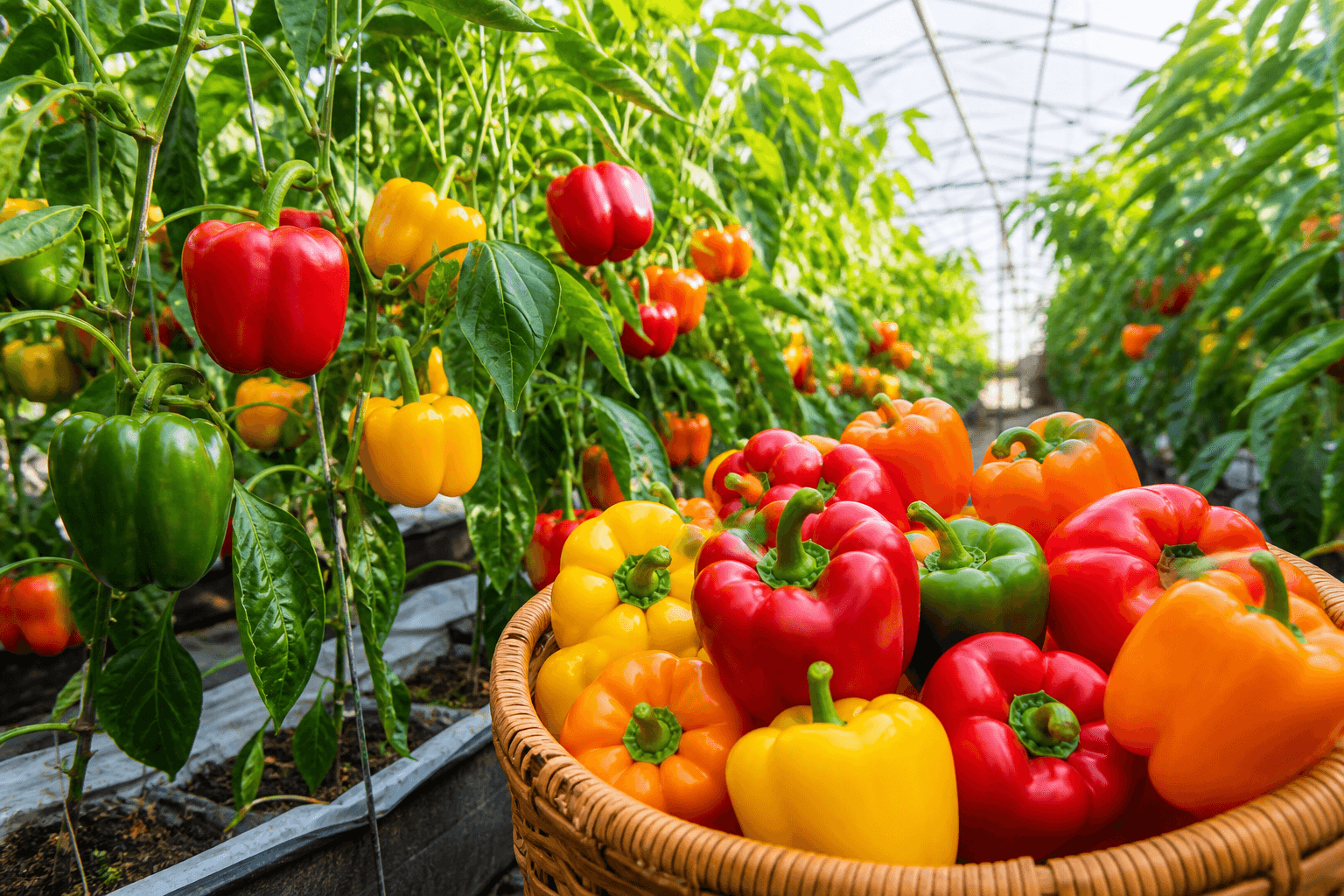
Coloured capsicum (red, yellow, orange) is the best balance of profit versus risk for first-timers. Demand from hotels, retail, and export channels supports premium pricing. Technical demands are real—training, drip/fertigation, pest monitoring—but lower than year-round Dutch rose cooling.
Market timing tip
Highest prices hit Oct–Dec when open-field supply drops. Plan planting calendars backward from this window. Off-season production is exactly why buyers pay ₹75–150/kg instead of mandi bulk rates.
Water and inputs
Capsicum is sensitive to high EC water. Get soil and water tested in your DPR; budget for RO treatment if EC is elevated. Use certified tissue-culture or pro-tray seedlings—book 3–4 months ahead. Roadside nursery stock is a top failure reason.
Tier 1 — Fastest cash flow: seedless cucumber
Net return: ~₹16.76 lakh per acre — best for quick cash flow.
| Parameter | Detail |
|---|---|
| Type | Parthenocarpic (seedless) |
| First harvest | ~35 days after planting |
| Cycles | 2–3 per year |
When loan EMI pressure starts early, cucumber's 35-day first harvest beats capsicum's longer crop cycle. Parthenocarpic varieties set fruit without pollination—ideal for sealed polyhouse environments.
Trade-off: per-cycle revenue is strong but crop life is shorter; plan staggered plantings for continuous harvest. Pair with Oct–Dec premium windows where possible.
Tier 2 — Floriculture: highest ceiling, highest risk
Dutch rose
Revenue: ₹12–18 lakh per acre — highest revenue but highest cost/risk.
- Requires guaranteed market (contract florists, exporters, auction agents)
- 5–6 year productive life of plants amortised against setup cost
- Strict climate, post-harvest, and grading standards
Roses reward experienced growers with buyer contracts—not first polyhouse cycles.
Gerbera and general floriculture
Revenue: ₹10–15 lakh per acre with more stable margins than rose.
- Gerbera productive life: 2–3 years
- Slightly more forgiving than Dutch rose on market fluctuations
- Still needs floriculture training and cold-chain handover
Floriculture inside fan-and-pad greenhouses (cost norm ₹1,400–1,650/sqm) suits regions where NVPH cannot hold humidity and temperature for flowers.
Tier 2 — Short-season specialties: cherry tomato and strawberry
Cherry tomato
- Short-season, high-value
- More salt-tolerant than capsicum — option when water EC is borderline and RO capex is deferred
- Retail and hotel demand for snacking tomatoes continues to grow
Strawberry
- Short-season, high-value winter crop in many north Indian belts
- Protected structure extends bearing season and reduces rain damage
- Requires runner management, mulching, and cold-chain for distant markets
Both fit crop rotation plans inside the same polyhouse—e.g., strawberry in winter, cucumber in summer—only if your approved DPR and subsidy permissions allow rotation with written approval.
Comparative crop table — protected cultivation
| Crop | Net return (₹/acre/year) | Risk level | Best for |
|---|---|---|---|
| Coloured capsicum | ~18.14 lakh | Medium | First-time polyhouse farmers |
| Seedless cucumber | ~16.76 lakh | Medium-low | Fast EMI coverage |
| Dutch rose | 12–18 lakh | High | Contract floriculture |
| Gerbera / floriculture | 10–15 lakh | Medium-high | Stable flower markets |
| Cherry tomato | High-value (seasonal) | Medium | Salt-affected water areas |
| Strawberry | High-value (seasonal) | Medium | Winter premium retail |
Figures derive from research compendium and Agrifirst NVPH data—they are not guarantees. District prices, varietal performance, and pest years vary.
Shade net vs polyhouse — crop fit
Not every high-value crop belongs in every structure:
- Shade net (₹710/sqm norm): nurseries, leafy vegetables, hardening beds—not full-scale capsicum export production
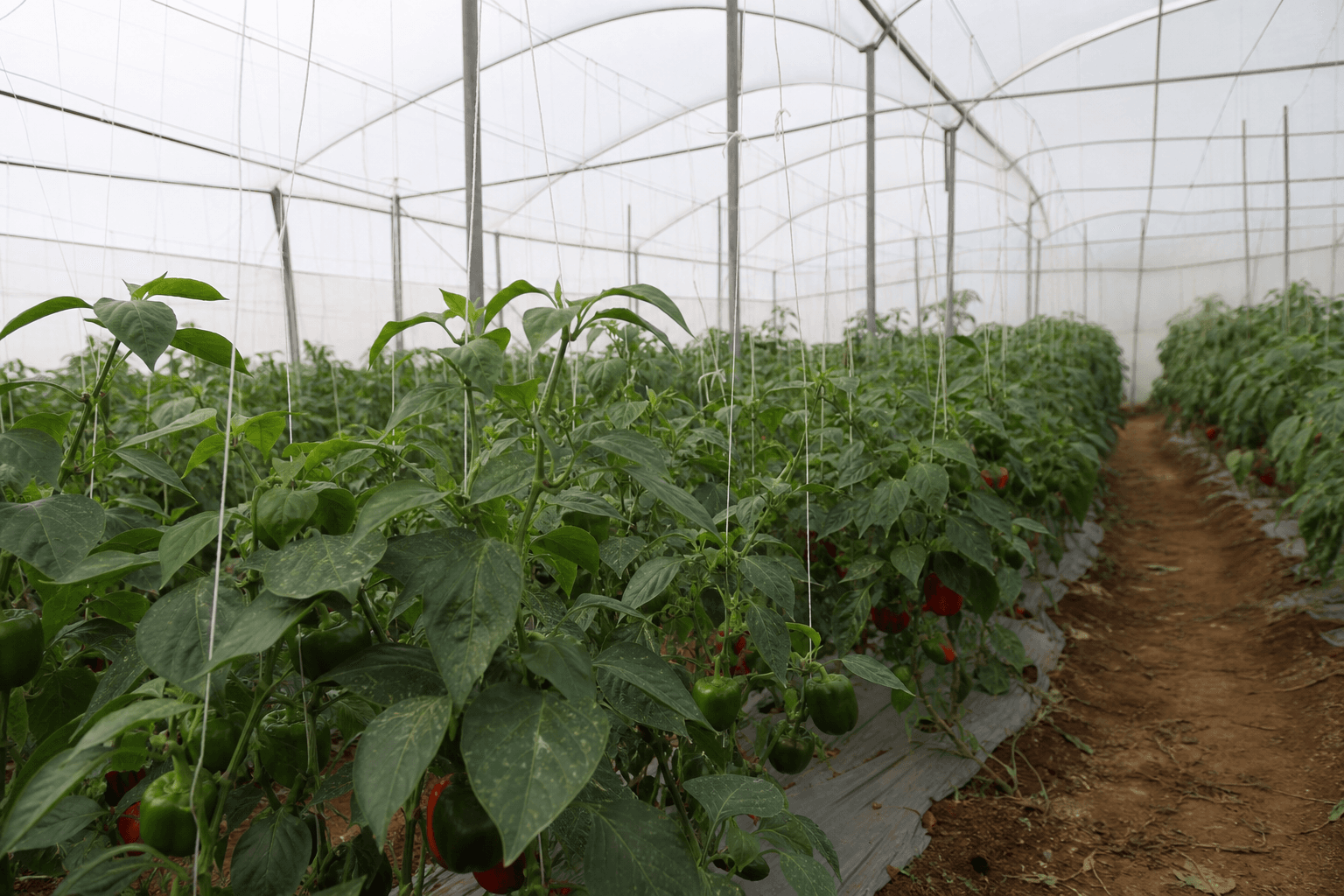
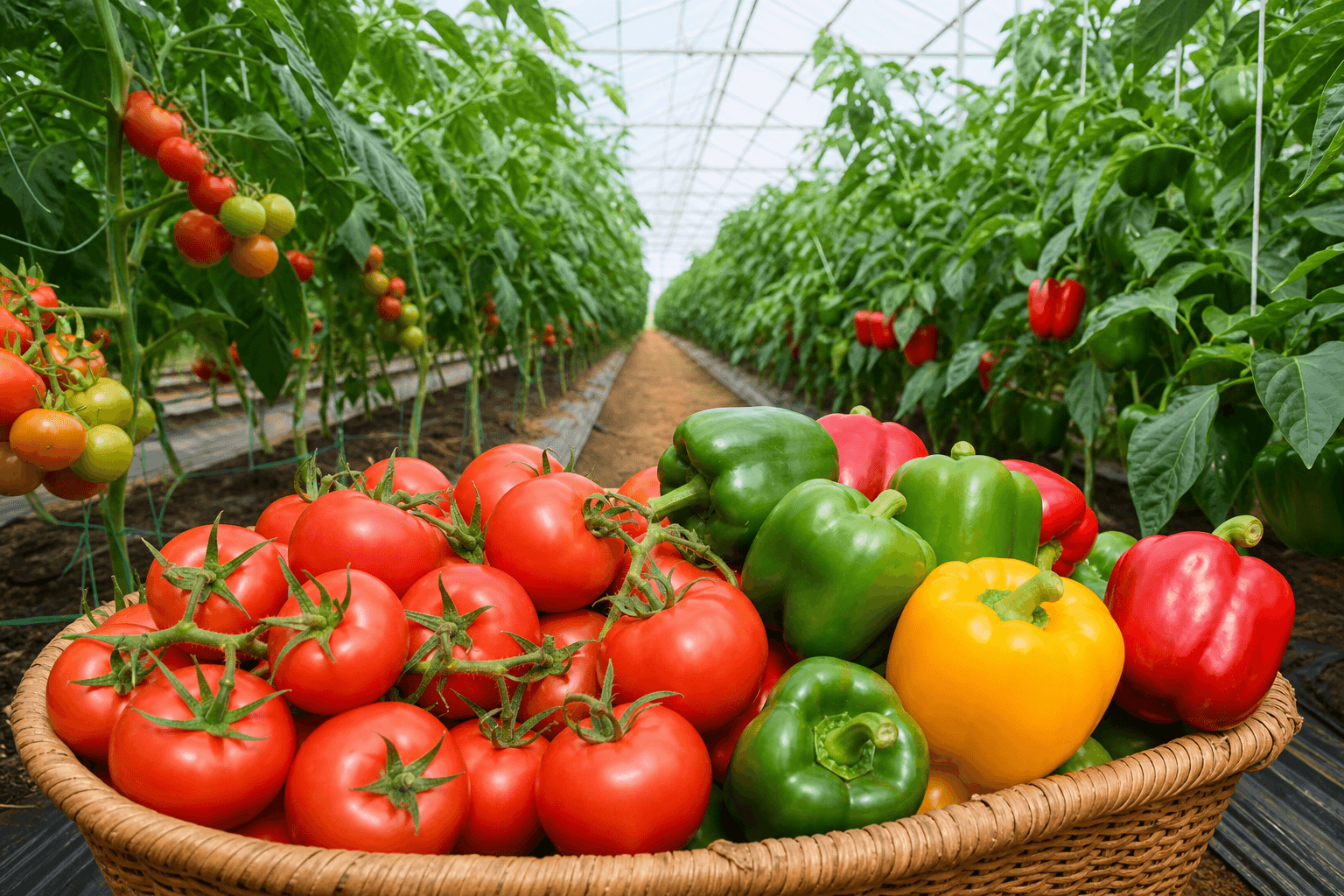
- NV polyhouse: capsicum, cucumber, cherry tomato, strawberry
- Fan-and-pad greenhouse: gerbera, Dutch rose, high-humidity floriculture
Graduating from shade net to polyhouse is a common path; see our shade net house farming guide and state-wise subsidy comparison.
Subsidy and DPR — crop plan is mandatory
Your bankable DPR must include:
- Crop plan with yield and price projections
- DSCR ≥1.5 and break-even analysis
- Technical specs: B-Class GI pipes, UV-stabilised polyfilm, drip/fertigation
- Market viability section with named buyers where possible
NHB/MIDH subsidises the structure—not crop failure. State top-ups from Telangana (95% SC/ST) to MP (80% small/marginal) shrink capex, but ₹4–6 lakh/year running costs continue regardless of mandi prices.
Read the master polyhouse subsidy guide 2026 for LoI/LoC rules and the 35–40% effective subsidy reality.
Crop selection decision framework
Answer these five questions before ordering seed or seedlings:
- Do I have a buyer? Pre-arrange mandi, exporter, or hotel linkage before planting (top failure mode nationally).
- Does my water EC suit the crop? RO for capsicum/gerbera; cherry tomato if EC is moderate.
- Can I manage the crop cycle? Cucumber for speed; capsicum for balanced margin; rose only with contracts.
- Does my DPR match the crop? No post-approval switches without written permission.
- Did I train first? ₹5,000–10,000 short courses pay for themselves in avoided first-year losses.
Combine protected cultivation with PMKSY drip subsidy (55% small/marginal, 45% others, state top-ups to 60–90%) to save ~70% water and ~40% fertiliser, improving margins on every crop in this guide.
Organic and export premiums
High-value protected crops can stack organic certification (PKVY ₹31,500/ha over 3 years, NPOP for export) and APEDA export pathways when input records and cluster compliance are maintained. Organic coloured capsicum and cherry tomato command dual premiums—but conversion timelines and NPOP audit costs must be in the business plan. See our organic export farming PKVY guide.
Hydroponics and vertical systems — same crop logic
Commercial hydroponics (₹70 lakh–₹1.5 crore/acre) targets lettuce, basil, cherry tomato, and bell pepper with ₹2–3 crore/year gross upper-bound scenarios and 20–30% ROI claims—present as vendor-optimistic ceilings, not defaults. Vertical farming (₹50 lakh–₹1 crore/acre) focuses on leafy greens, microgreens, herbs, strawberries; energy is up to 40% of expenses.
The crop ranking logic is identical: high kg price × high yield × low waste. Protected soil/growing-media cultivation in polyhouses remains the mainstream Indian path because subsidy routes (NHB/MIDH 50%) directly fund the structure.
Related reading
- Polyhouse best high-profit crops (2026) — companion crop-focused article
- Polyhouse farming profit, cost & subsidy — investment and payback maths
- Polyhouse subsidy guide 2026 — apply before build, effective subsidy check
- 9 mistakes that cancel subsidy — wrong crops and DJI drones among them
Bottom line
Protected cultivation profits concentrate in a handful of crops. Coloured capsicum (~₹18.14 lakh/acre net) leads for first-timers; seedless cucumber (~₹16.76 lakh/acre) leads for speed; Dutch rose (₹12–18 lakh/acre) leads on revenue ceiling with maximum risk; gerbera (₹10–15 lakh/acre) offers floriculture stability; cherry tomato and strawberry fill seasonal niches—with cherry tomato tolerating salt better than capsicum.
Pick the crop that matches your water, market, training, and DPR—not the crop your input dealer stocks today. Then fund the structure through NHM/MIDH/NHB with approval before you build, and execute planting calendars toward Oct–Dec price peaks where applicable.
Verify all price and yield assumptions on official horticulture portals and through local market surveys before bank sanction.
Frequently asked questions
Which crop gives the highest net return in a polyhouse?
Coloured capsicum delivers the best balance of profit versus risk for first-timers, with net returns around ₹18.14 lakh per acre per year from naturally ventilated polyhouse project data, at yields of 32–50 tonnes/acre and prices of ₹75–150/kg.
Which protected cultivation crop has the fastest cash flow?
Seedless (parthenocarpic) cucumber harvest starts in roughly 35 days, with 2–3 cycles per year possible, netting about ₹16.76 lakh per acre — the best option for quick cash flow in polyhouses.
Is floriculture more profitable than vegetables in polyhouses?
Dutch rose can earn ₹12–18 lakh per acre — among the highest revenue figures — but carries the highest cost and market risk, requiring guaranteed buyers and a 5–6 year productive life. Gerbera offers ₹10–15 lakh per acre with a 2–3 year productive span and more stable margins.
Can I grow low-value vegetables in a subsidised polyhouse?
Growing low-value crops like spinach or okra in an expensive polyhouse is a common mistake. Structure costs ₹25–40 lakh per acre before subsidy; crops must match that investment with ₹10–18 lakh+ net returns.
Does water quality affect which crop I should choose?
Yes. High electrical conductivity (EC) water requires an RO plant before growing sensitive crops like capsicum or gerbera. Cherry tomato is more salt-tolerant than capsicum and suits slightly compromised water quality.