Farmers across India are asking how to “solar panel laga kar paise kaise kamaye” without giving up cultivation entirely. PM-KUSUM — the Pradhan Mantri Kisan Urja Suraksha evam Utthaan Mahabhiyan — is the central answer: three components for pumps, feeders, and megawatt-scale plants on agricultural land. This pillar guide separates Component A, B, and C, cites official income figures where available, and points to PM-KUSUM 2.0 agrivoltaics for farmers who want crops and panels on the same plot.
Numbers below come from MNRE scheme documents, Rajya Sabha replies, and Budget reporting in our research file. Tariffs, deadlines, and state procedures change — verify on official portal at pmkusum.mnre.gov.in and your state nodal agency before you sign a PPA or pump quotation.
PM-KUSUM at a glance
| Component | What it does | Who benefits |
|---|---|---|
| A | 500 kW–2 MW grid-connected plants on farm/barren land | Farmers, FPOs, Renewable Power Generator (RPG) |
| B | Standalone solar pumps up to 7.5 HP | Individual farmers |
| C | Solarise 35 lakh grid-connected pumps + feeder solarisation | Farmers with grid pumps; surplus to DISCOM |
National progress (as of 30 Nov 2025): about 20.42 lakh farmers benefited; Maharashtra leads (11,21,416), then Rajasthan (2,35,924) and Gujarat (2,28,504). Over 10 lakh standalone pumps and 13+ lakh grid pumps solarised. Component-A deployment has lagged at roughly 8.4% of its 10,000 MW target — opportunity exists, but paperwork and substation proximity matter.
Phase timing: Phase-1 sunset was 31 March 2026 in some sources, with extensions cited to March 2027 — confirm active window on mnre.gov.in.
Component A — sell power from 500 kW to 2 MW plants
Component A targets 10,000 MW of decentralised 500 kW–2 MW ground or stilt-mounted grid-connected plants on barren, fallow, or cultivable land. Power is sold to the DISCOM under a 25-year PPA.
Capital cost and subsidy
- Capital cost about ₹4 crore per MW
- No capital subsidy — the Renewable Power Generator self-finances; banks including SBI may lend up to 70%
- Land need: about 4–5 acres per MW within 5 km of a 33/11 kV substation
- PPA typically executed within 2 months of Letter of Award
Income and tariffs
DISCOMs buy at a Feed-in-Tariff set by your State Electricity Regulatory Commission (SERC). Recent discovered tariffs have ranged ₹2.75–3.10 per unit, with examples such as Kerala (KSERC) ceiling ₹3.50 per unit and Telangana (TGERC) ₹3.13/kWh at 19% CUF normative.
Official median income: about ₹4.5 lakh per MW per month (MoS New & Renewable Energy Shripad Yesso Naik, Rajya Sabha written reply, 16 Dec 2025) — approximately ₹54 lakh per MW per year gross, consistent with ~19% CUF at ~₹3/unit. Some vendor blogs cite far lower monthly figures; treat the official figure as gross revenue and model O&M, loan EMI, and land lease separately.
Investors in 0.5–2 MW plants have been estimated at 11–16% annual ROI (IISD/CEEW/CSTEP report, 8 April 2026) — not a government guarantee.
Land lease income
If you lease land instead of owning the plant:
- About ₹30,000 per acre per year (IISD)
- Up to ₹80,000 per hectare per year (government citations)
- Higher potential under agrivoltaics (see agrivoltaics and PM-KUSUM 2.0)
Vendor claims of ₹1–2 lakh per acre are optimistic outliers — plan conservatively.
DISCOM Performance-Based Incentive
₹0.40 per unit or ₹6.6 lakh per MW, whichever is less, for 5 years from commercial operation date (COD).
Component B — standalone solar pumps (up to 7.5 HP)
Component B targets 14 lakh standalone solar pumps.
Subsidy structure:
- 60% subsidy total (30% central + 30% state)
- 30% loan, 10% farmer contribution
- NE/hilly/island UTs: 50% central share; state adds ≥30%
Economics example: A 5 HP diesel-to-solar switch costing about ₹3–4 lakh may fall to ₹1.2–1.6 lakh after subsidy, with payback under two years in cited cases — verify pump benchmark cost on your state portal.
Best for: Farmers with unreliable diesel costs, distant grid lines, or high irrigation hours.
Component C — solarise grid-connected pumps
Component C covers solarisation of 35 lakh grid-connected pumps plus feeder-level solarisation; surplus power can be sold to the DISCOM.
- CFA 30% of benchmark cost
- Feeder solarisation: about ₹1.05 crore per MW
- Component C land-leasing cited around ₹25,000 per acre per year (MoS Rajya Sabha reply)
Documents often include land records (Khasra/Khatauni), Aadhaar, bank passbook, and electricity bill.
How to apply (practical checklist)
- Identify your component (A, B, or C) on pmkusum.mnre.gov.in.
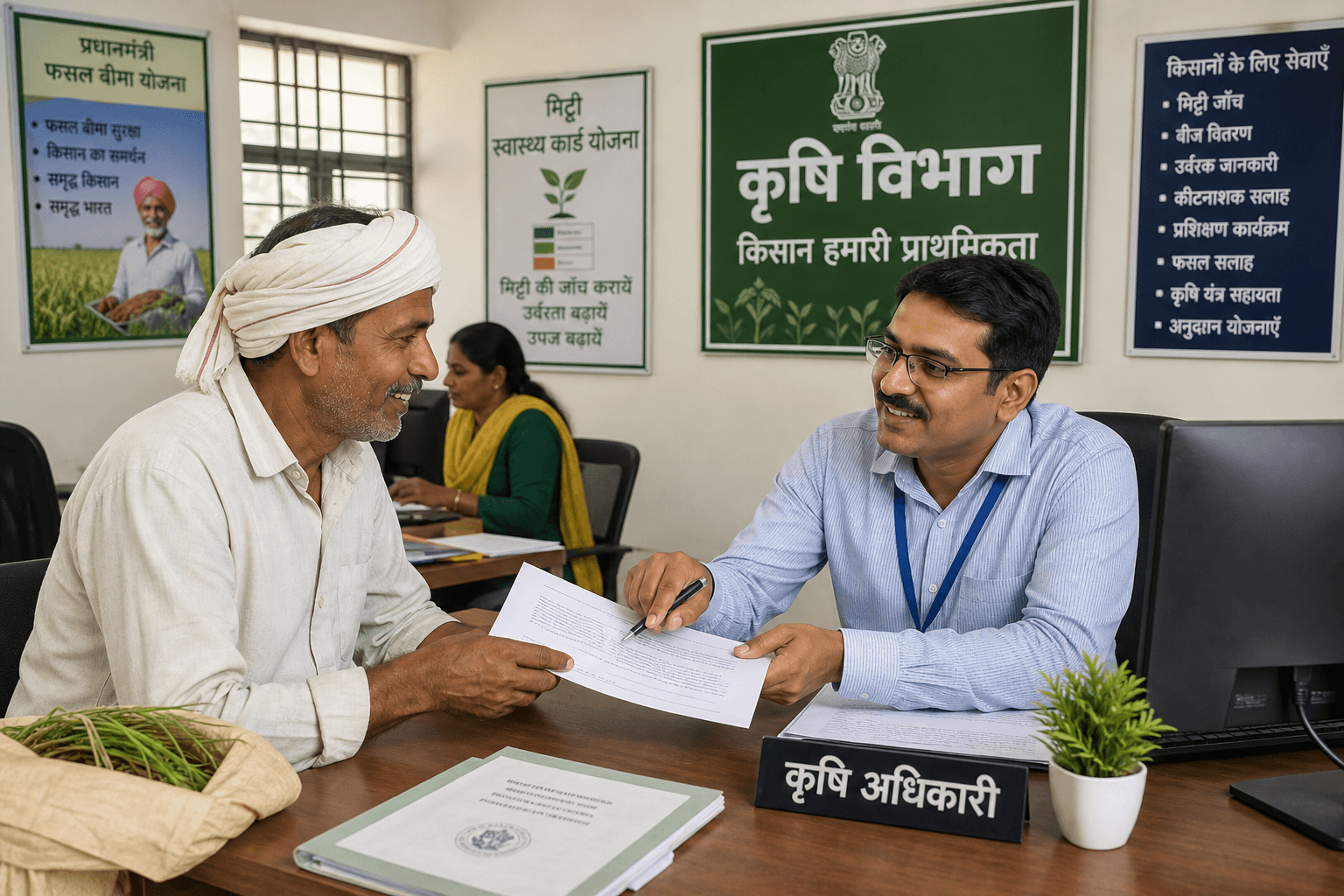
- Route through your state nodal agency (UPNEDA, TEDA, etc.) — portals differ.
- Gather land records, Aadhaar, bank passbook, and utility bills as required.
- For Component A, confirm substation distance and DISCOM feasibility early.
- For pumps, use MNRE-approved vendors and benchmark costs — rejected quotations waste a season.
Budget 2026-27 and PM-KUSUM 2.0
Union Budget reporting raised PM-KUSUM allocation from about ₹2,600 crore (BE 2025-26) to ₹5,000 crore (~92% increase) for 2026-27. Cite as Budget Estimate until operational guidelines confirm.
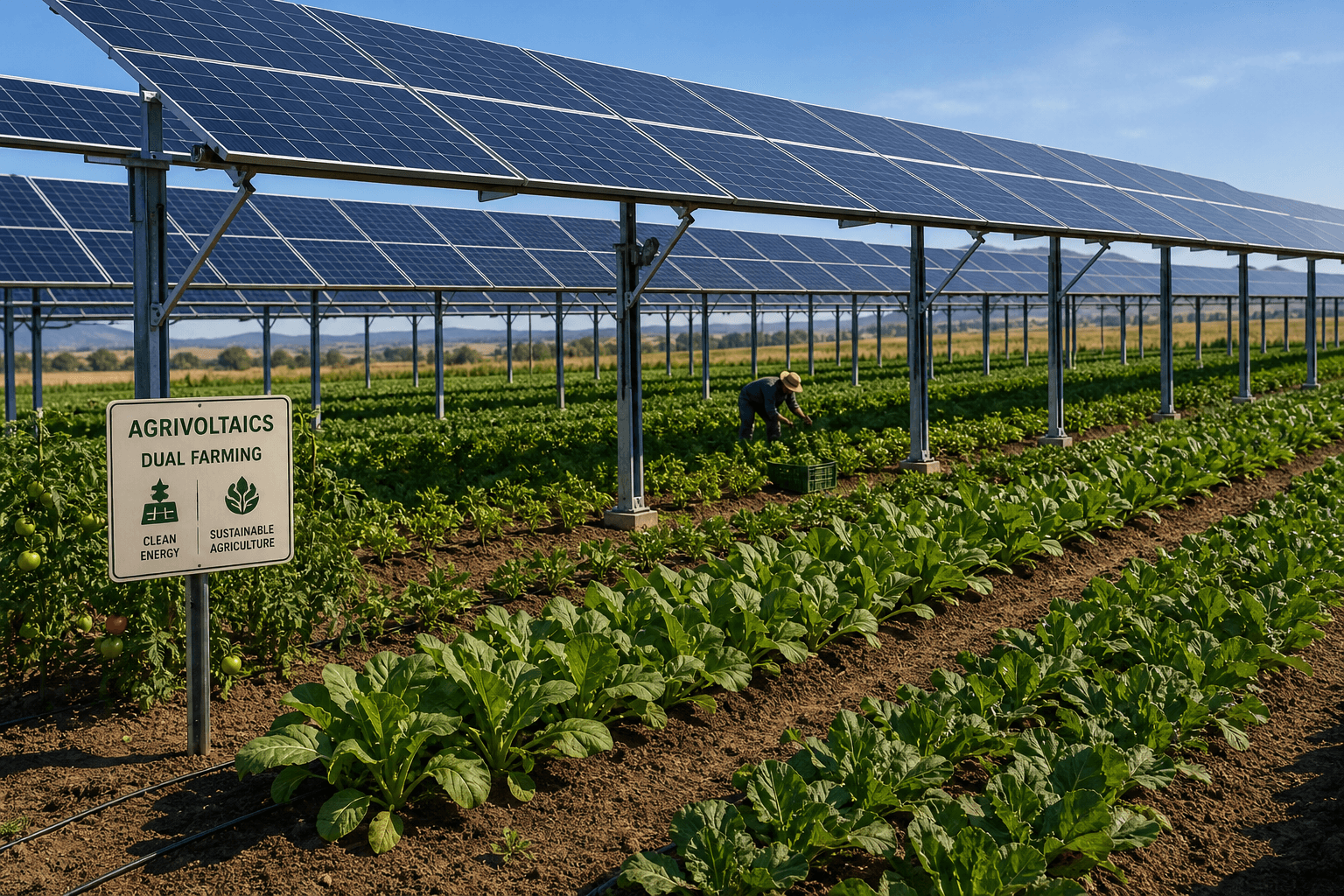
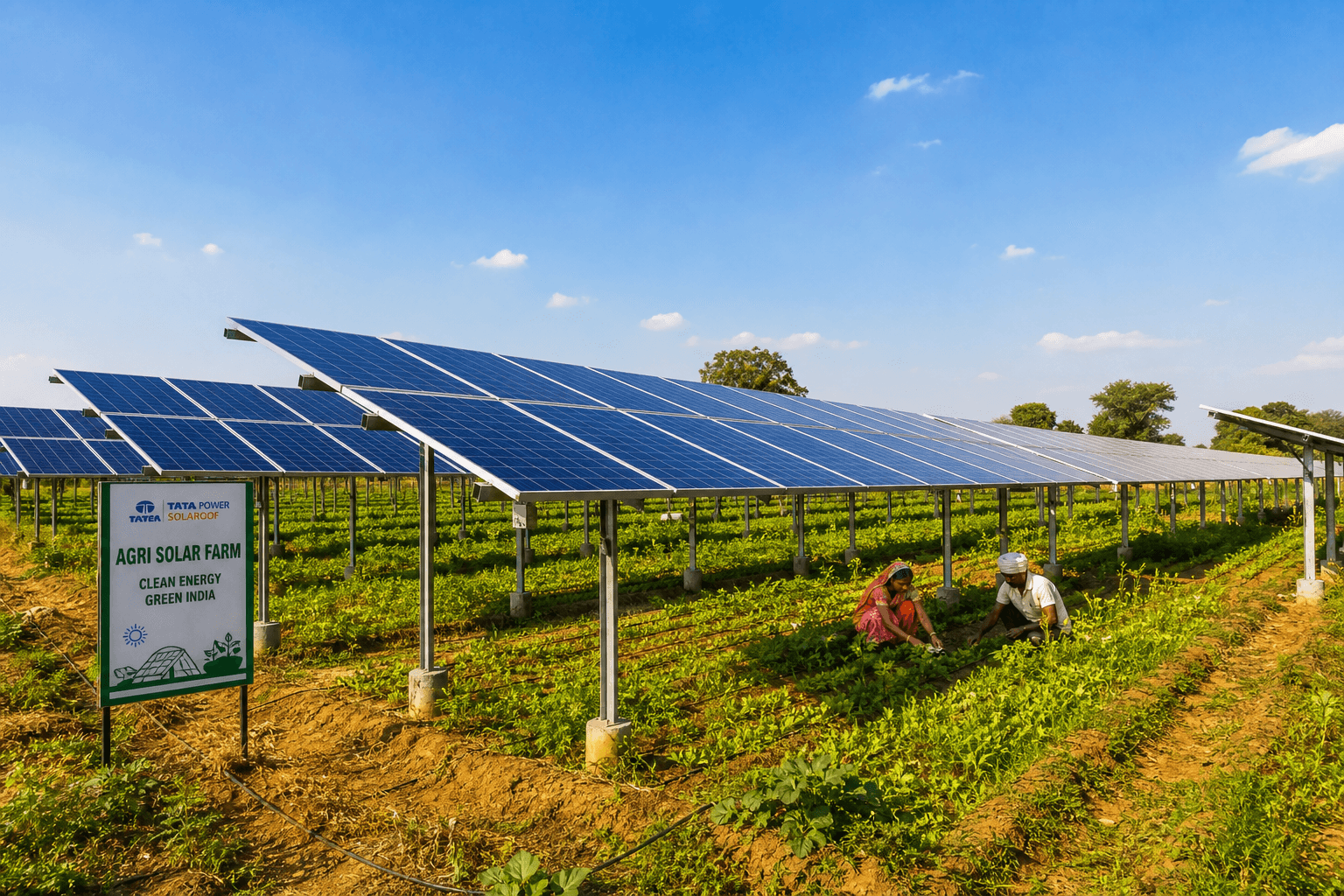
At the 4th National Agro-RE Summit (New Delhi, 10–11 March 2026, NSEFI / India Agrivoltaics Alliance), Union Minister Pralhad Joshi announced PM-KUSUM 2.0 with a dedicated 10 GW Agri-PV (agrivoltaic) component for co-locating solar with crops. He cited studies lifting incomes from about ₹60,000 per acre to more than ₹1 lakh per acre, and India's agrivoltaic potential at 3,000 GW to nearly 14,000 GW. As of March 2026, ~50 AgriPV pilots existed (e.g. ICAR-CAZRI, Jodhpur). Detailed PM-KUSUM 2.0 guidelines were not yet released — read our dedicated agrivoltaics guide for what farmers should prepare now.
Component A vs B vs C — which path fits you?
| Your situation | Start here |
|---|---|
| Barren/fallow land near substation, access to finance | Component A (with professional RPG/FPO structure) |
| Off-grid or expensive diesel irrigation | Component B pump |
| Existing grid pump, willing to sell surplus | Component C |
| Active cropping, cannot idle land | Agrivoltaics / stilt (future PM-KUSUM 2.0; pilots today) |
Risks and honest caveats
- Tariffs vary by state — never use another state’s ₹/kWh in your DPR.
- Component A needs grid discipline and timely PPA execution.
- Income conflicts online: use official ₹4.5 lakh/MW/month as gross benchmark, then deduct costs.
- Phase sunsets — confirm extension rules before capital commitment.
Stack with other farm schemes
Solar income does not block PMKSY drip, NHB polyhouse on another parcel, or AIF interest subvention on cold storage — but land-use and DPR disclosures must stay consistent. Polyhouse entrepreneurs with spare barren land sometimes lease for Component A while growing high-value crops under protected cultivation on irrigated plots — see polyhouse profit guide for the horticulture side.
Bottom line
PM-KUSUM turns sunlight into three income paths: utility-scale sale (A), pump savings (B), and grid-pump solarisation (C). Anchor planning on SERC tariffs, the ₹4.5 lakh/MW/month official gross median for Component A, and 60% pump subsidy where eligible. For farming under panels, follow agrivoltaics — PM-KUSUM 2.0.
Keep records for 25 years
Component A PPAs run 25 years. Scan land records, sanction letters, and DISCOM correspondence into cloud storage the day you receive them. A lost Khatauni copy during a lease dispute can freeze tariff payments for months. If your village is far from a 33/11 kV substation, ask the nodal agency for a pre-feasibility note in writing before you pay a developer booking amount — distance rules are strict.
Last updated May 2026. Verify on pmkusum.mnre.gov.in and your DISCOM.
Frequently asked questions
What is PM-KUSUM and who can apply?
PM-KUSUM (Pradhan Mantri Kisan Urja Suraksha evam Utthaan Mahabhiyan) promotes solar on farms through three components — decentralised plants (A), standalone pumps (B), and grid-connected pump solarisation (C). Farmers, FPOs, and renewable power generators apply via state nodal agencies (e.g. UPNEDA, TEDA) or pmkusum.mnre.gov.in with land records, Aadhaar, bank passbook, and electricity bill where required.
How much income can a 1 MW solar plant earn under Component A?
An official median income figure cited in a Rajya Sabha reply (MoS New & Renewable Energy, 16 Dec 2025) is about ₹4.5 lakh per MW per month — roughly ₹54 lakh per MW per year gross at applicable CUF and tariffs. Actual tariffs are set by your State Electricity Regulatory Commission (SERC); recent discovered tariffs have been in the ₹2.75–3.50 per unit range depending on state.
What subsidy is available on solar pumps under Component B?
Up to 60% subsidy (30% central + 30% state), with 30% loan and 10% farmer share. In NE/hilly/island UTs the central share can be 50% with state adding at least 30%. A 5 HP diesel-to-solar switch costing about ₹3–4 lakh may drop to ₹1.2–1.6 lakh after subsidy, with payback under two years in cited examples.
Has PM-KUSUM budget increased in 2026?
Union Budget 2026-27 reporting raised PM-KUSUM allocation from about ₹2,600 crore (BE 2025-26) to ₹5,000 crore — roughly a 92% increase. Treat as Budget Estimate and verify on official portal. PM-KUSUM 2.0 with a 10 GW Agri-PV component was announced in March 2026; detailed guidelines were not yet released as of that date.